Lori's WAYMAKER - Jim Russell - Media Pioneer Built 20th Century Broadcasting (Jan. 30, 1946 - Sept 13, 2022)
Jim Russell belonged to the generation that created the deep value of American public broadcasting—not simply programs, but a belief about what media was for.
He came to public radio as a journalist. After beginning in radio at American University, he reported from the Vietnam War and the U.S. invasion of Cambodia for United Press International. In 1971, Bill Siemering recruited him as one of NPR’s first correspondents because the young network needed what Siemering called greater “journalistic heft.” Jim would go on to become Executive Producer of All Things Considered and contribute to the development of Morning Edition. He later spent a decade in public television as VP and station director of KTCA/KTCI, where he helped create the PBS science series Newton’s Apple.
But the list of programs doesn’t explain Jim. Jim believed deeply in the story—and in the responsibility of the person telling it.
The early NPR was experimental. There wasn’t a formula yet. Jim’s colleague Jay Kernis remembered that they were essentially making it up as they went along. Jim’s answer wasn’t to become safer. It was to try different ways of telling stories and, if something didn’t work, refuse to put it on the air. He established high standards while preserving the freedom to experiment.
He also understood something more subtle: the subject itself wasn’t what made journalism valuable. What you did with the subject did. Decades later, Jim wrote that when he ran All Things Considered, he pushed his staff to find the revealing angle the mainstream press hadn’t found yet—to get to the meaning of the story, and to make it human and relevant.
That philosophy followed him to Long Beach.
In 1988, Jim looked at business broadcasting and saw important information being delivered in ways he found dense and boring. His response wasn’t to make the existing thing slightly better. He imagined another way: business and economics could be creative, informative and entertaining while remaining serious journalism.
He created Marketplace.
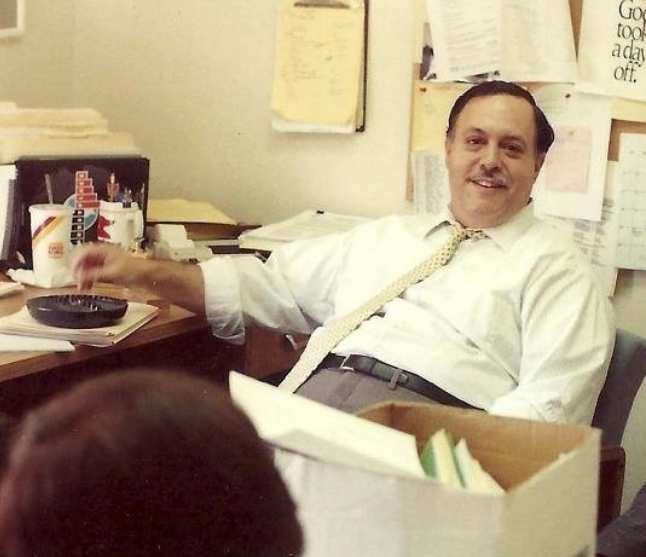
On January 2, 1989, when Marketplace launched from Long Beach, I was Jim Russell’s assistant.
That matters to my story because I wasn’t learning Jim’s philosophy from a book years later. I was young and watching a builder build.
I saw a man who could hold the enormous idea and the smallest detail simultaneously. During that difficult startup, colleagues remembered Jim as being involved in everything and loving the editing booth. On the first broadcast, the hastily constructed studio door wouldn’t stay properly closed—so Jim leaned against the door himself to keep unwanted sound off the air. When Marketplace ran out of money less than three months later, he fought to find the sponsorship that kept it alive.
That was Jim.
The story mattered enough to hold the door shut yourself.
And the people telling the story mattered, too.
Jim had an extraordinary eye for talent. He could push people brutally hard, but he also understood that you couldn’t manufacture another person’s voice for them. When he hired David Brancaccio to host Marketplace, he deliberately gave the young broadcaster room to find his own voice. Jim listened and waited until one day he could finally tell him, in essence: now I can hear that the show belongs to you. Brancaccio later said he had never encountered that kind of mentoring before or since.
Jim kept building. He became SVP and GM of New Program Development at American Public Media, developed and launched Weekend America, participated in the development of The World, and eventually became “The Program Doctor,” helping other public broadcasters develop and strengthen their programs.
But underneath the programs was a remarkably consistent idea.
Don’t duplicate what everyone else is doing. Find the angle they missed. Make the complex human. Find the right voice. Take the creative risk. Hold the work to a standard. And remember that the audience deserves something worth hearing.
Jim’s son Ted described the principle underneath all of it through a tiny story. When Ted was a child, he once didn’t return a grocery cart because nobody else was returning theirs. Jim sent him back. What other people chose to do wasn’t the standard. What you chose to do said who you were.
That may be the deepest value Jim brought to public broadcasting.
The medium wasn’t valuable merely because it was public.
It became valuable because people like Jim Russell believed they had an obligation to make it worthy of the public’s trust.
I was fortunate enough to begin my own career sitting beside one of the people who helped build that idea into American broadcasting.