SCOTLAND • 1715

A KINGDOM ON THE EDGE OF REBELLION

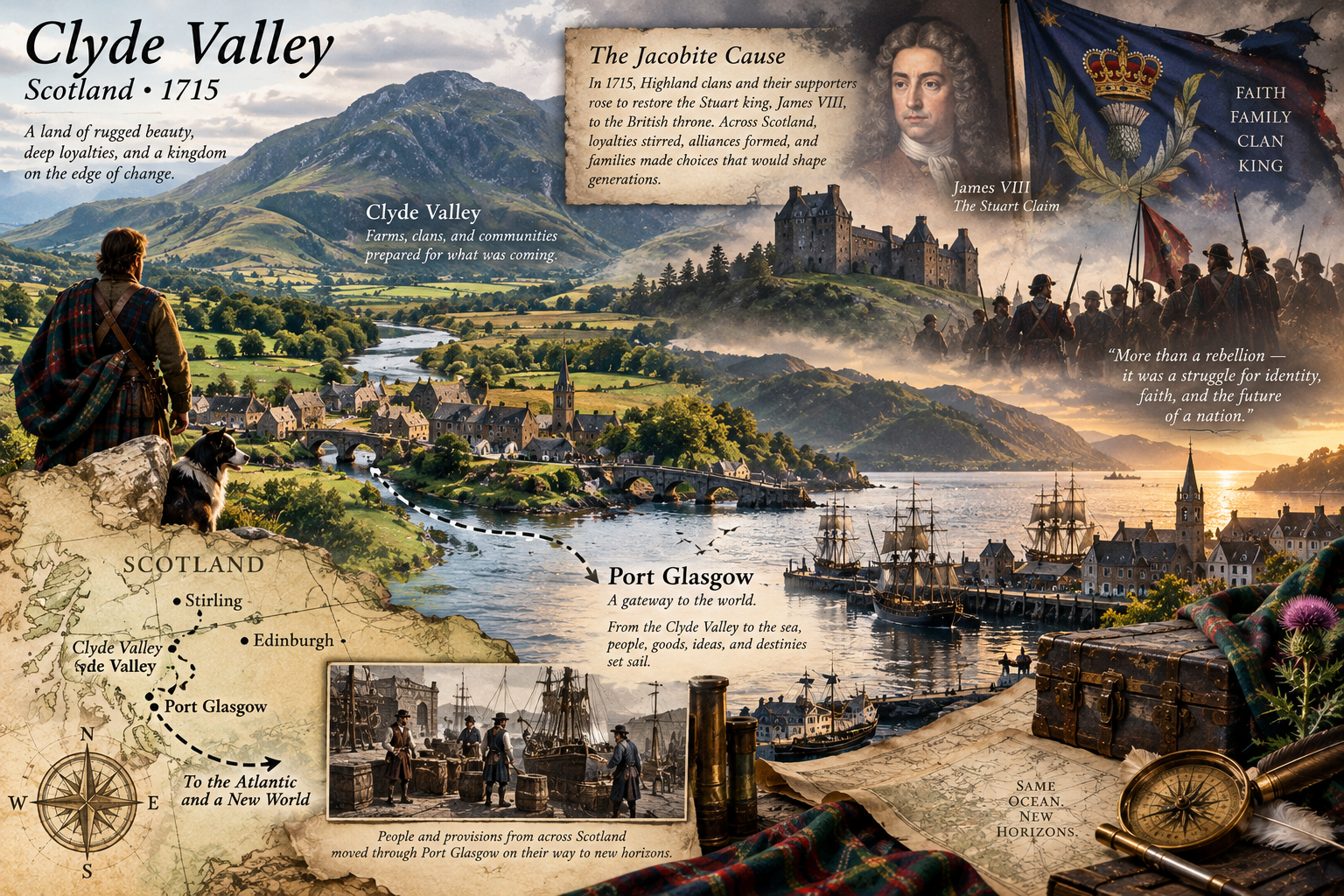
The Davis family was preparing to leave Scotland at a moment when the country itself was entering another period of upheaval.

Queen Anne had died the year before. George I, a Hanoverian, now occupied the British throne. But support remained for the exiled Stuart line— and in the summer of 1715, rumors of rebellion were already moving through Scotland. By September, John Erskine, Earl of Mar, would raise the Stuart standard at Braemar, beginning what became known as the Jacobite Rising of 1715. For ordinary families, politics did not remain in palaces. News traveled along roads, through markets, taverns, churches and workshops. Men chose sides. Horses and supplies moved. Families wondered what might come next.

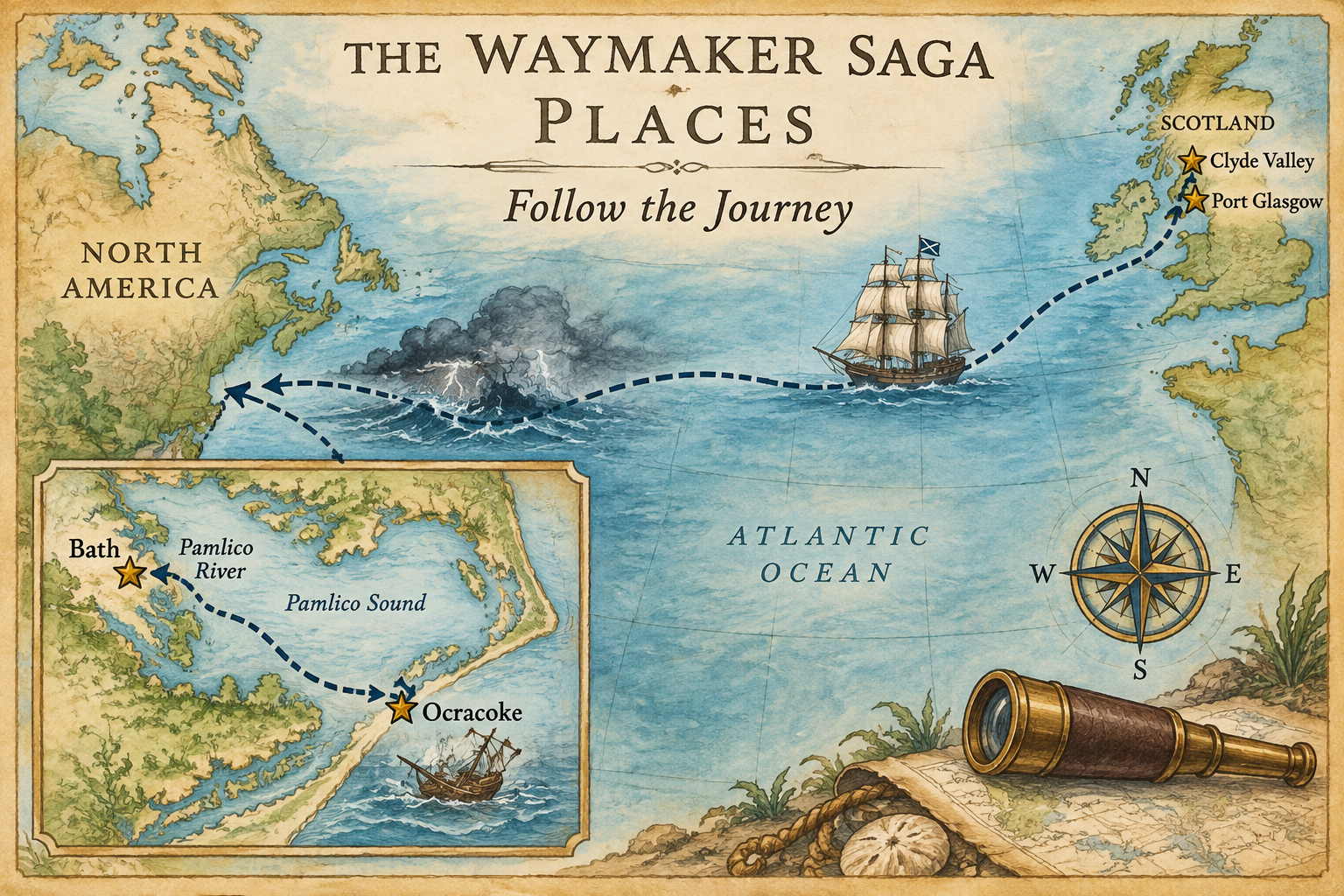
And somewhere in the Clyde Valley, Joshua and Sara Davis were preparing for a different kind of upheaval. They were leaving.

BEHIND THEM SCOTLAND WAS MOVING TOWARD REBELLION. AHEAD OF THEM WAS AN OCEAN.

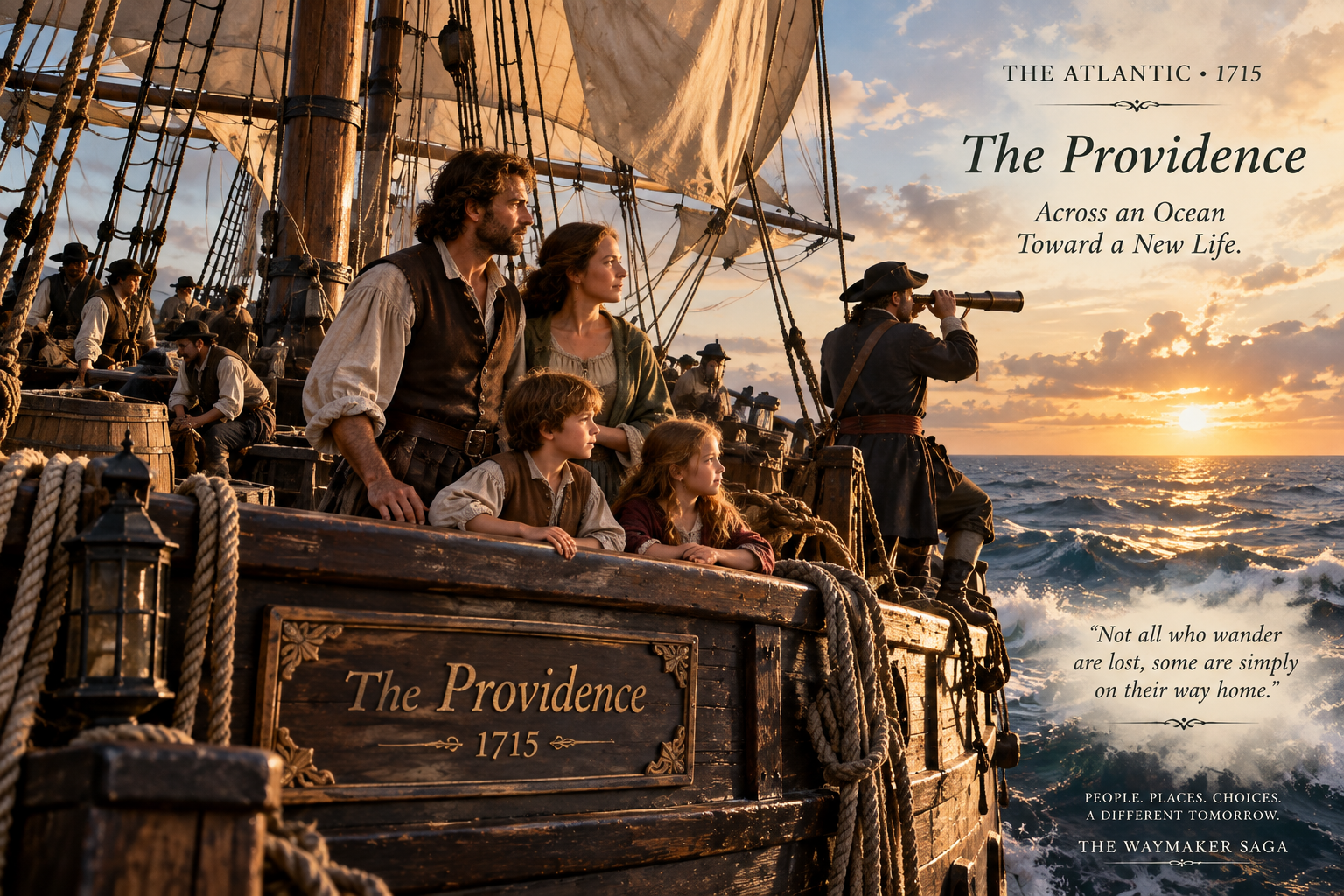
SHIP ⚓ THE PROVIDENCE ⚓ JULY 1715

Across the Atlantic toward a life they could not yet see.

IN SEARCH OF A BRIGHTER FUTURE

They were not simply leaving Scotland. Like generations of families who would cross the Atlantic after them, they were moving toward possibility.  Before they saw the New World, they had already been told its story.

In 1709, explorer and surveyor John Lawson published A New Voyage to Carolina in London—a vivid account of the land, climate, plants, animals, Native peoples and possibilities he had encountered during his travels through Carolina. Lawson hoped his descriptions would encourage Europeans to settle there.

Six years later, families like the Davises were crossing the Atlantic toward that promise.

The man who helped sell Europeans the dream of Carolina had also helped lay out Bath—the town toward which the Davis family’s journey would ultimately turn.

OCRACOKE ISLAND • AUTUMN 1715

THE STORM THAT CHANGED EVERYTHING

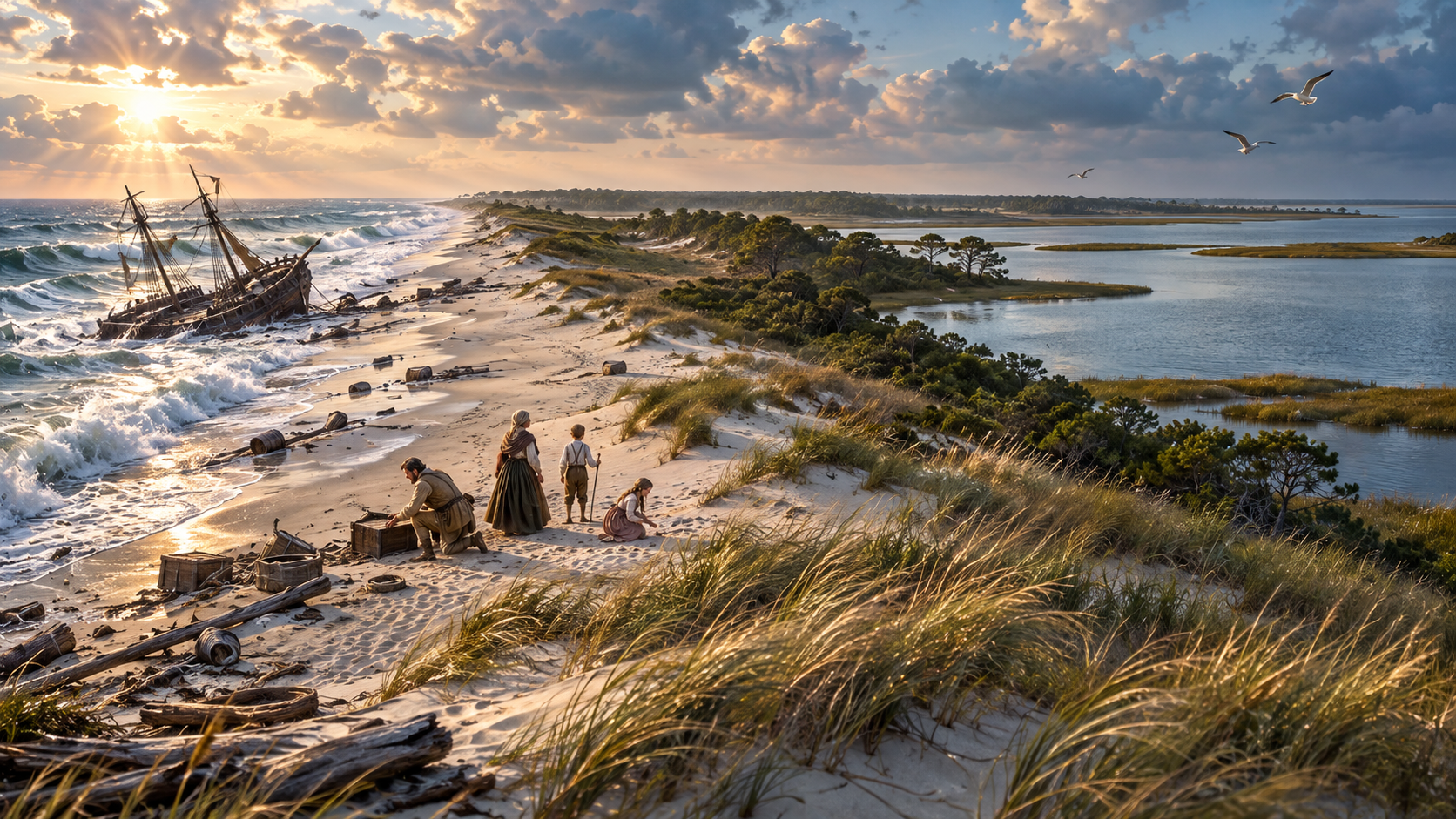
The Providence never completed her voyage.  Driven into the waters near Ocracoke, the ship was lost and the Davis family was thrown onto a narrow barrier island between the Atlantic and Pamlico Sound.  For Joshua, Sara, John and Elspeth, the journey to a new life had suddenly become a struggle simply to survive.

They had crossed an ocean. Now they had to survive the shore.

WHAT SURVIVED THE STORM

An old Bible • a sea map • a compass • a small boat • Sara’s satchel • Joshua’s hammer • a white feather

BATH • 1715

TEN YEARS OLD. ALREADY MAKING HISTORY.

North Carolina’s first town was still barely a town.

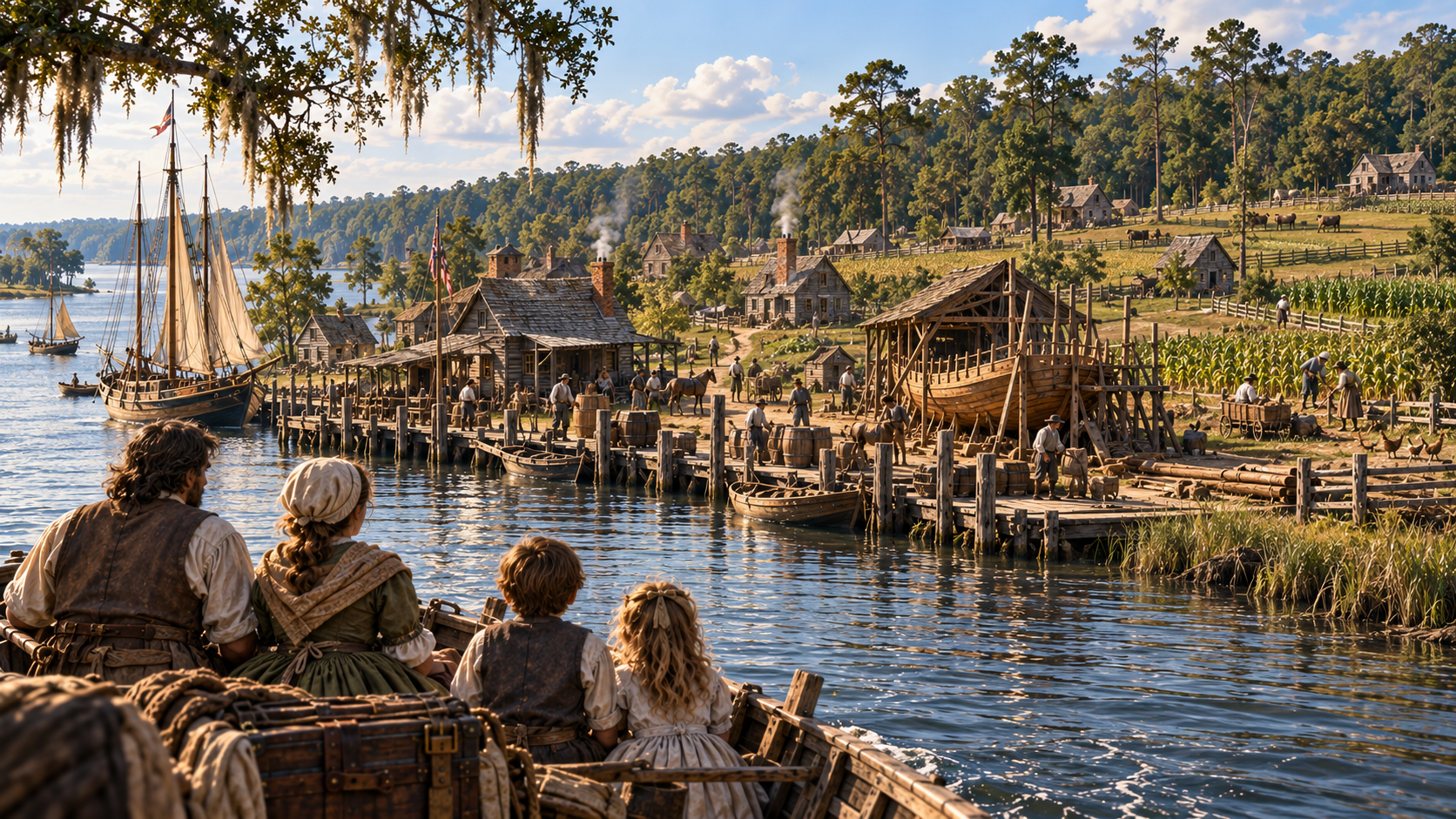
A dozen houses had stood here only seven years earlier. Plantations stretched along the surrounding waterways. A shipyard worked beside the creek. Tobacco, furs and naval stores moved through its landings. And within a year, Bath would become North Carolina’s first official port of entry.

But this was not an untouched frontier. Bath had survived rebellion, epidemic, drought and the Tuscarora War. Indigenous peoples had lived across this landscape long before the colonial town existed. And somewhere beyond the sounds, the age of Blackbeard was about to begin.

Into this small, complicated, changing place came four survivors from Scotland—with an old Bible, a map, a compass, a satchel, a hammer and a white feather.

They had finally reached somewhere they could begin again.

Scroll to Top